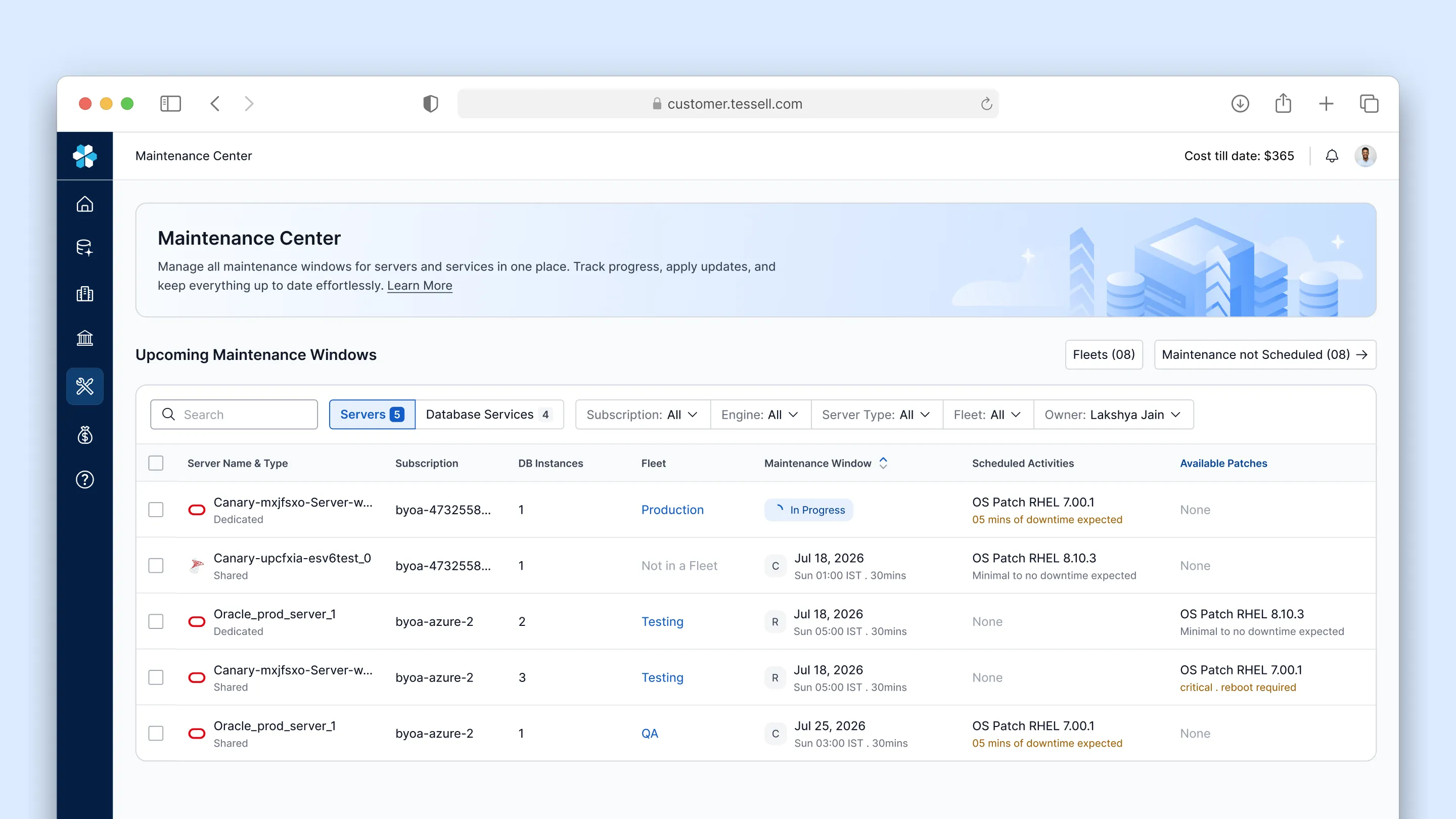
Maintenance Center
Over three years I took database maintenance at Tessell from a support ticket to a self-service product, and owned it across four releases.
Read the case study
01Selected work
Each case walks through the constraints, the edge cases, and the trade-offs behind the final design, not just the screens that shipped.
Over three years I took database maintenance at Tessell from a support ticket to a self-service product, and owned it across four releases.
Read the case study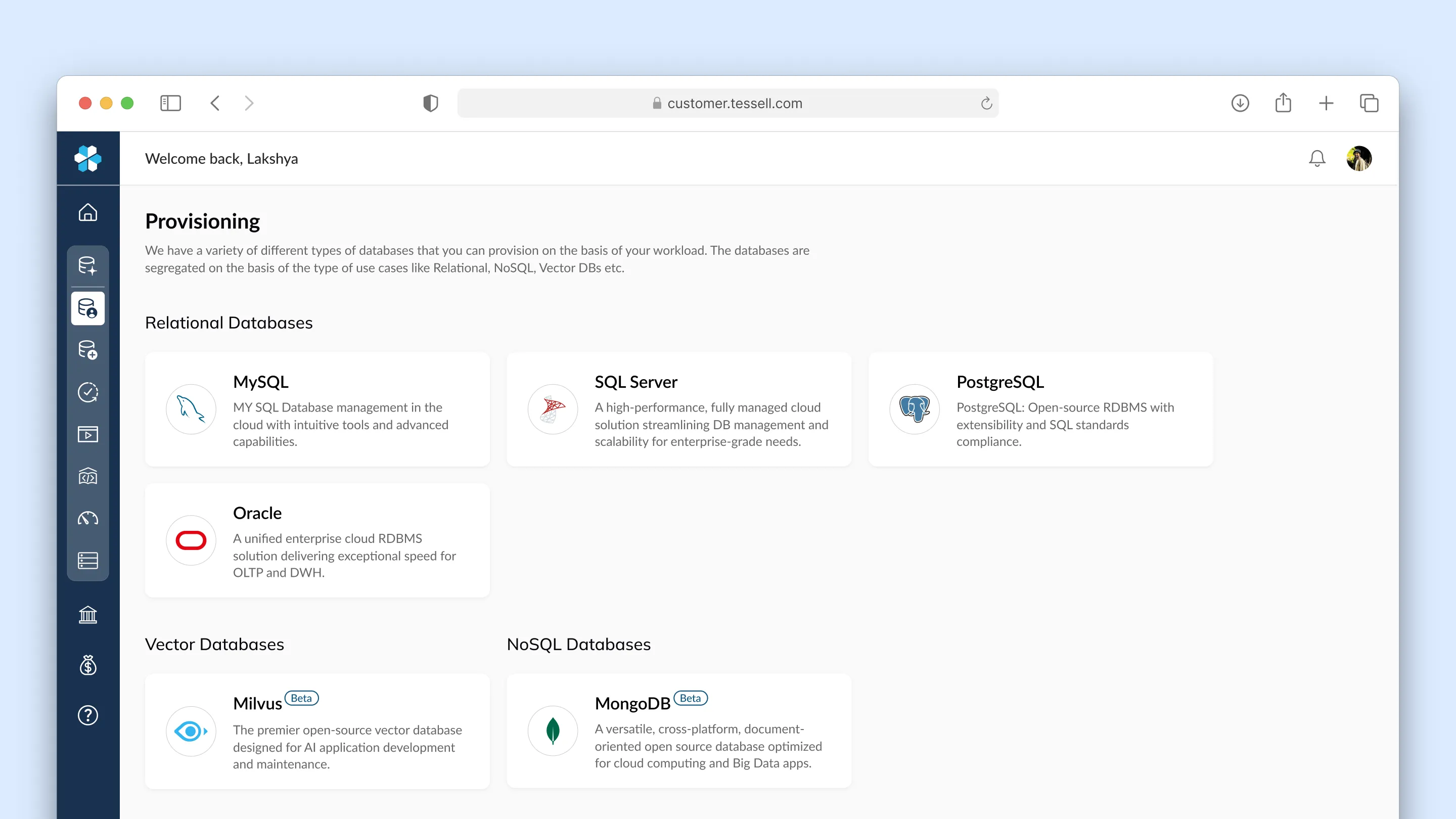
A rebuilt provisioning system for Tessell's database platform, replacing a seven-step wizard with an engine catalog and a single sectioned page built to absorb new engines and clouds without redesign.
Read the case study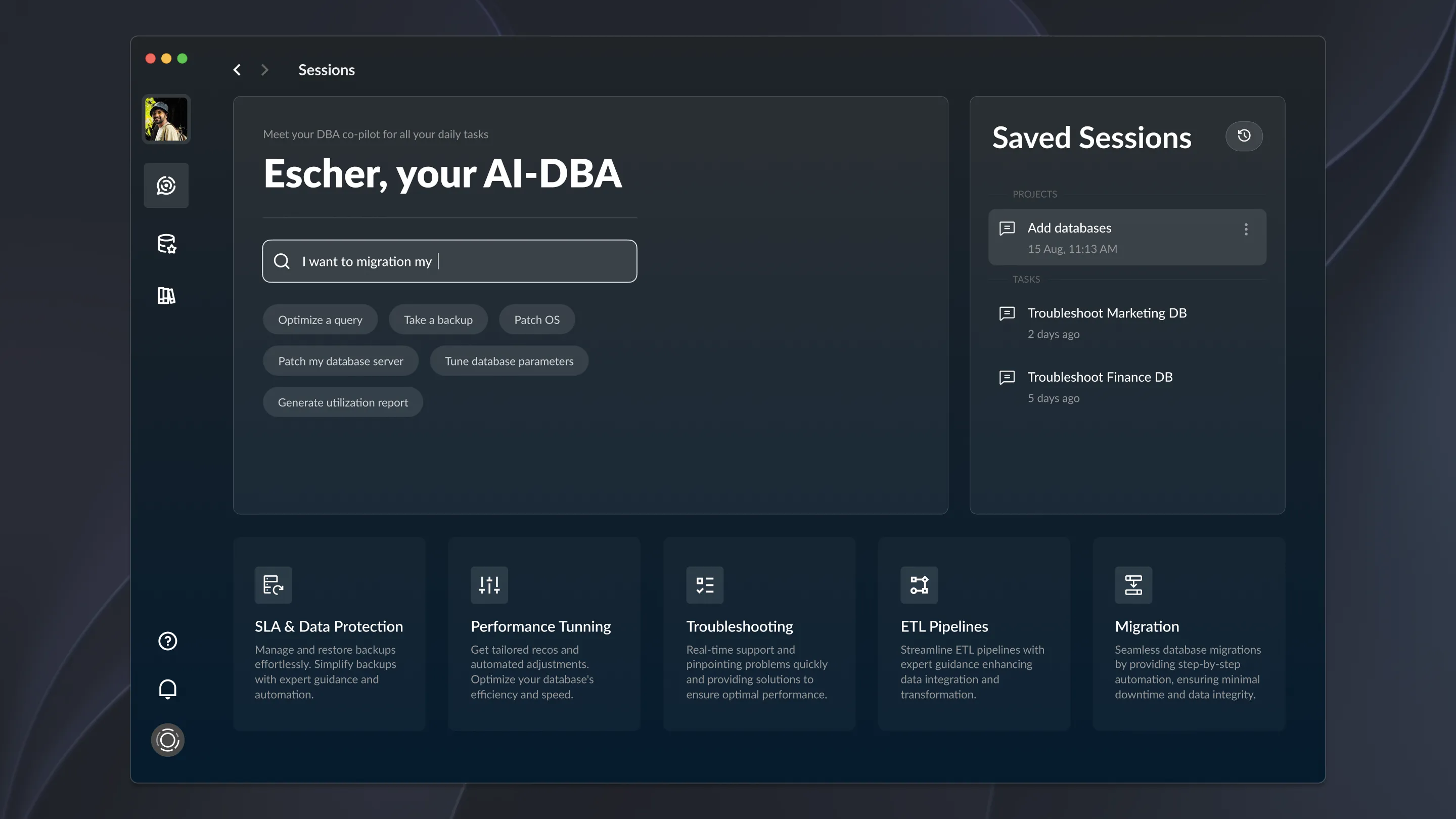 Coming soon
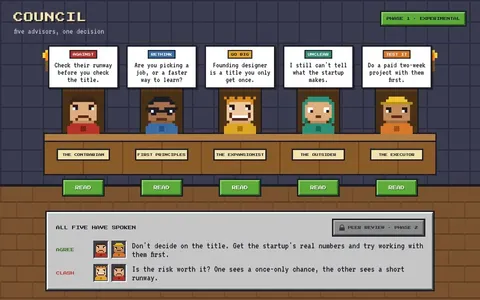
Defined and designed Tessell’s 0→1 AI-DBA, turning an open-ended AI bet into an agentic product for investigating, deciding, and acting on database operations.
Coming soon02What I do

Born in
Kota, Rajasthan, India
Outcome
My work ships as screens. The impact doesn't.
The screen is just where the work becomes visible. What actually ships is fewer SRE tickets, faster time to POC, and systems people trust enough to stop checking.
My users aren't figuring things out for the first time. They're power users running dense workflows who already know exactly what they want.
My job is to get the complexity out of their way. Speed and clarity are what I'm designing for.
Origin
Engineer turned designer. Still thinking like an engineer.
I started in engineering, but I was always more drawn to how a system actually behaved than to what showed up on screen. That instinct followed me into design.
Knowing how the backend works still shapes how I design, the constraints I see, the trade-offs I make, and what I choose to simplify.
So moving into design never felt like a pivot. It felt like the same curiosity, aimed at a new question: understand how something works before deciding how it should look. And that's still how I approach design today.
Most of my best design calls still start as engineering ones.
Philosophy
I see designers as directors. The interface is the cast.
A director doesn't act out every scene. They decide what the audience should notice, what should stay in the background, and how every scene fits into the story.
Design works the same way.
The interface is what people see, but the designer is responsible for how the experience unfolds, what gets attention, what gets out of the way, and how everything works together.
The interface gets the credit. The direction makes it work.
04Experience
Four years across three companies, from Web3 to fintech to enterprise infrastructure, with a growing focus on complex B2B workflows.
Senior Product Designer
Product Designer
Totality Corp (opens in a new tab)
Education
Indian Institute of Technology Roorkee (IITR)
05Contact